Friday, February 28, 2020

Marked by More Than Ashes


Wednesday morning was not a good day for parking at our local church. Even though the sister I live with and I had left early, there was not a space to be found when we arrived for the morning Mass. Pulling in behind the parish school, we finally found a spot a few minutes after the service had started.

"Ash Wednesday," we sighed in unison.

By the time we found a seat, the lector was into the second reading from the second letter to the Corinthians. Paul's familiar words washed over us: "We appeal to you not to receive the grace of God in vain. For God says: In an acceptable time I heard you, and on the day of salvation I helped you. Behold, now is a very acceptable time; behold, now is the day of salvation" (2 Cor 6:1-2).

After a quick homily and invitation to consider the call of the Lenten season, we lined up to receive our ashes. Reminded that the dust we bore on our brows was a sign of our beginning and our end, I looked around at the church filled with fresh-pressed crosses, each one as unique as the individuals who bore them.

And then, just as quickly as Communion was received, those dusty brows headed out into the world, leaving an empty parking lot to be filled with eager hearts and clean heads within the hour.

"Where did all those people go?" the sister I had been with asked later in the day. "I went to the store and nothing… not a cross in sight!" We both marveled at this.

The question, innocent enough, stayed with me.

Later, driving through a neighborhood in Philadelphia plagued by the opioid epidemic, I marveled at the people walking by in drug-induced stupors. With the exception of my forehead, there were no ashes in sight and yet there were people bearing crosses all around.

Stopping to visit a center where our sisters minister to immigrants in the neighborhood, I found a priest giving out ashes to the students and teachers inside. "Where will all these people go?" I thought to myself.

This neighborhood was where I began my journey in religious life. It left an indelible mark on me. 
Here I encountered Christ in the neighbors I worked with and the life we shared. The mark of faith it (and they) left on me was a call to believe in the Good News and to witness to the life, love, and hope found in and among the dirt and dust.

As I left the center, the priest stepped out onto the street behind me. Every few steps, someone would stop him to ask him for ashes. As I got into my car, the refrain of "repent and believe in the Good News" rang in my ears.

That is the good news of Lent, each step is another opportunity to be marked by the cross, to receive the grace of God not in vain but in the glory of the moment.

Beyond the ashes, there is something gritty about these Lenten days. These days offer us the chance to feel differently. In fasting, we recognize our limits and our needs, both of which we can so often overlook. In so doing, we also recognize the reality and the needs of so many of our neighbors who regularly go without.

These 40 days also give us the opportunity to remember who we are. While the cross we receive on our foreheads on Ash Wednesday makes us mindful of who we are and who we claim to be for a day, the intentionality of the entire Lenten season calls us to be mindful of who we are even when the ashes wash off. We are reminded of who we are called to be and we recall who we have been and who we, in the process of living, have become. Our lives are to be the sign of our faith and witness to the transformation, renewal, and repentance Lent calls for.

"Behold, now is a very acceptable time;" Paul declares to the Corinthians, "behold, now is the day of salvation." Those words we first heard on Ash Wednesday reverberate throughout Lent. Now is an acceptable time; now is the moment you and God have been waiting for.

So, what would it mean if we lived each moment of this Lenten season in that manner: beholding the perfection of this moment?

What would it mean for us if we declared in our hearts the supreme acceptability of each and every moment to encounter God, to meet love, to offer mercy, to heal and be healed? And what would it mean for the world around us, if in our words and actions we chose to accept the invitation each moment has to offer? If we saw today as the acceptable time to be who (and how) God calls us to be?

The choice is ours. We can choose to see the crosses others bear. We can choose to believe in the good news. We can choose to reflect light in the darkness and to have the courage to speak truth to power. We can choose to let the defining marks of our life be kindness and compassion. We can and we must.

These choices are the grit that mark our lives; they are the signs that we have heard God's invitation and are responding. Our lives then become the marks Christ leaves in the world, the crosses drawn with each step on the journey and each act of love and mercy. Believing the good news and putting it into action requires getting our hands dirty, it calls our attention to the dust beneath our fingernails, and it allows us to help and be helped on this day of our salvation.

"Behold," I said to myself looking in the mirror Wednesday night as I wiped the ashes from my forehead. "Behold, you have been marked by more than just ashes."

Monday, January 6, 2020

Reprisal: Epiphany on Moreland Street

In honor of the Epiphany, this January 6th I offer a reprisal of a poem from 2016. Follow the light my friends, follow it wherever it leads.

Epiphany on Moreland Street

In the light of the night
they lay
unceremoniously discarded by the roadside
conifers cast aside with
season's cheer and a chill in the air

and as I drove past
the only guide, a set of headlights
I wondered- when does room at the inn run out?
what price must be paid for new life?

And there in rings as bright as day
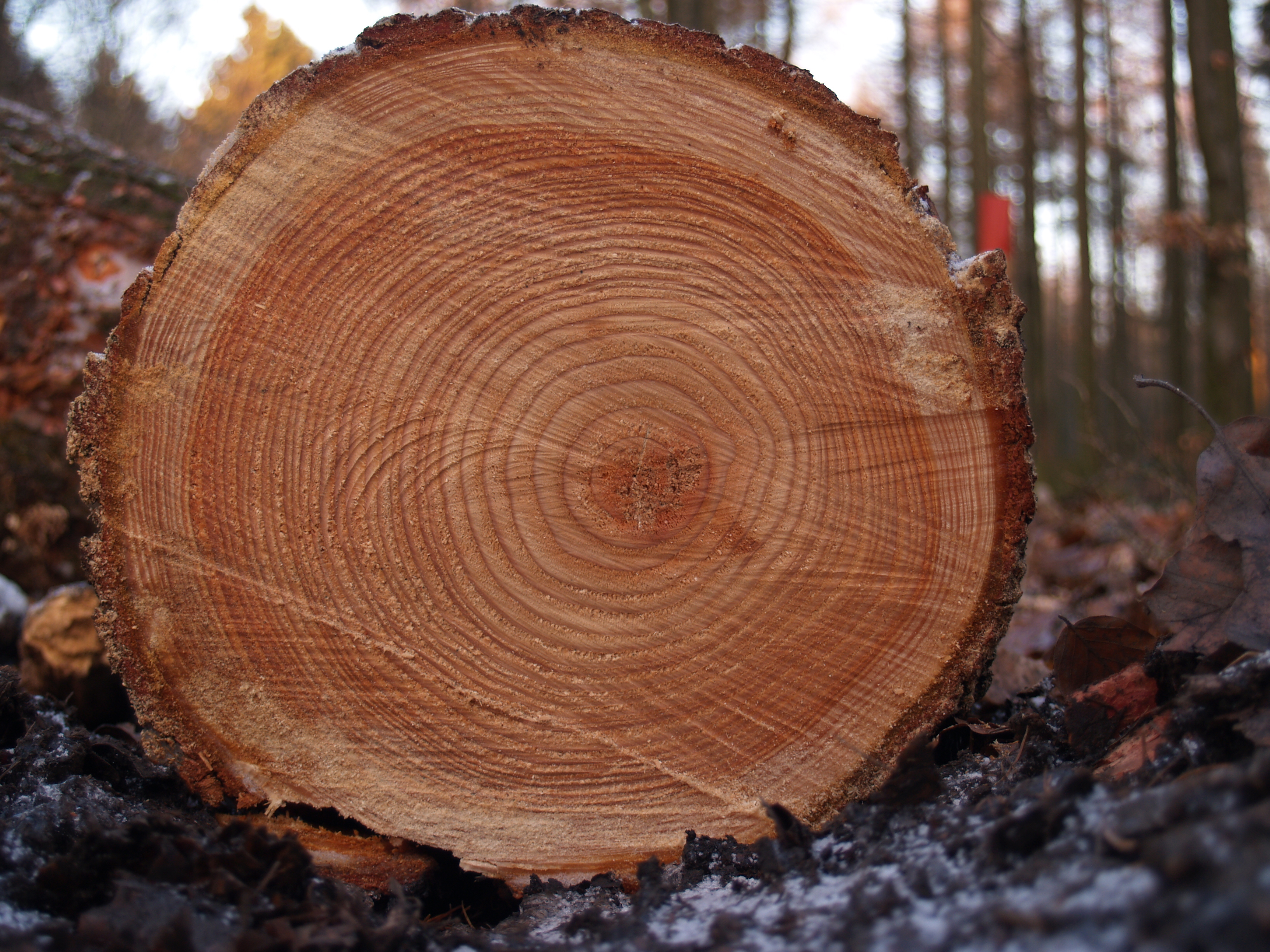
like stars traced out across the sky
the stumps answered in
a chilled chorus of Hallelujah:

Keep your gifts.
It takes a life.
To make a manger...
to take the journey.

Friday, January 3, 2020

The grace of perspective: 20/20 Vision for the new year


As we enter into the new year, I invite you to take a moment to pause and look back. One of the greatest callings to us at this time of year is to embrace the grace of perspective. As we bid farewell to 2019 and say hello to 2020, that's exactly what I've taken time to reflect on in my most recent column for the Global Sisters Report. Blessings of perspective, patience, and perseverance to you all this new year!

The day before New Year's Eve I met for breakfast with an old friend from college. In a tiny cafĂ© in Boston, far from the life I've grown accustomed to with my sisters, we reminisced about days gone by. The truth was, with the exception of a message here or there and a random dinner a few years back ― the year of which neither of us could exactly recall ― we had slipped off each other's radars.

Still, as we laughed about the things we thought we knew when we were younger and listened attentively to the events we'd missed in each other's lives, drawing parallels all along the way, it was as if the 10 years of relative absence in between us melted away.

"When did we get so old?" We uttered in unison to one another as the meal began coming to a close.

It wasn't a question of age, but rather an acknowledgment of a distance covered quickly in conversation and yet separated clearly by chronology. Where had the time gone? We seemed to be asking one another. And what's more, where would the time ahead lead us?

Parting ways, we both gave thanks for the relationship we had and the connection rekindled at year's end. The questions of time past and future still hung in the air, and yet, overwhelmingly, I was taken by the gift of gratitude and grace of perspective I found in that moment.

In this season of recollection and renewal, as we make resolutions and mark the new year, it is the perfect moment to consider the grace of a healthy perspective and to step back and assess the grace at work in our lives.

At its core, perspective is the way we see the world and our place in it. A healthy perspective grounds us in the reality of what is; it recognizes who we are and how we are in the world, it allows us to better interact and relate to others, and it judges freely how to proceed based on a balanced vision of experiences and encounters.

Perspective, of course, comes from our own vantage point. Thus, to have a balanced and fairly realistic view both of what has been and what is requires self-awareness, frank honesty, deep patience, and a willingness to consider the many sides of a situation. Gaining perspective, then, is a process that requires the hard work of mindfulness, which ultimately leads to peace.

This work of gaining perspective is done both in our everyday interactions and in the silence of our hearts. At this time of year, as we pause to look back at the year and decade that have been, we have the perfect opportunity to gain and deepen our perspective.

A healthy perspective "doesn't only see what we wish to see … it allows us to better encounter everything we must face to move forward in life," psychologist Dr. Robert Wicks writes. "[A healthy perspective] doesn't help us run away from the truth … it enables us to put things in their proper place."

At the precipice of this new decade, we have the opportunity to consider what has been, how we've come to where we are and what perspective these considerations offer to our assessment of what may be, or what we may be called to in the days, weeks and months ahead.

For myself, I've found it helpful to consider what the last 10 years have held in my life. If I were to give this decade a name, what would it be?

For me, the decade by and large had been marked by the transition into adulthood that comes in your 20s and 30s, with particular attention to my own movement into religious life. Above everything else that this decade has held, socially, politically or otherwise, it has been for me the decade of the sister.

At the beginning of the decade, I was just beginning to visit sisters and inquire about what this life and call could mean for me. Hopes and desires abounded. In the ensuing 10 years, some of those dreams have become realities, transforming with all the realism that comes with such metamorphosis.

Realized dreams, we soon often find, can be less shiny than we imagined. Looking back on what has come to pass in these last 10 years, it is important to take stock in the essence of what was longed for and what was realized. The congruence of these two aspects gives us perspective on the work of the Spirit and our own attentiveness to the Spirit's work in our lives.

In 2010, I longed for intentional community, for a deeper relationship with God, for a spirituality, charism and mission I could find a home in. That longing led me to religious life. What I imagined was a beatific vision of the life I now live. The years since have refined that vision, revealing realities not seen or understood before. Experience has put my hopes and dreams in perspective. The essence of those desires has not changed, but the perceived path forward and vision for what can be and how it can be has needed to be re-envisioned.

As I look back, I read my own words from 2015. At the midpoint of the last decade, I was writing about the need to see with eyes of hope through lenses both mystical and realistic. "We have to be visionary," I wrote then as I reflected on the call of religious life. "We believe in what we cannot see and, through faith, we learn to see in ways unknown and unclear. In time, vision progresses. We cannot know what tomorrow holds, but we can learn to see the signs of the times and anticipate what may be to come."

On the brink of this new decade, I still believe this to be true. The vision of our hearts adjusts just like that of our eyes. Whether the outlook is bleak and foggy or bright and clear, we have been given eyes to see and hearts to weather all conditions.

The hopes and desires with which I started the decade have not been lost. Some have changed, and some have faded. Others have been reinforced and demand attention more readily. And yet still others ― new dreams, desires and hopes ― have come and been added to the collection in my heart.

If the decade has taught me anything, it is that change comes incrementally. God works in our desires and our desires are realized in the slow work of the Spirit played out in daily choices and prayerful attentiveness.

Where I began the decade as an inquirer to religious life, I end these 10 years as a newly perpetually professed member of a congregation. This change didn't happen overnight; it relied on the faithfulness, patience and perseverance that become apparent within the context of healthy perspective-taking.

As I look forward to the year ahead and beyond, I wonder what could possibly be in store. What will change in me and in the world? What do I need to hold tightly, and what would I be better off letting go of? How clear is my vision and to what might God be inviting me ― both in big movements and small ― for the years ahead?

No matter how we answer these questions, we must be mindful of our vision: what we see, how we see, and why we see things the way we do. With a healthy sense of perspective, we can receive the grace of eyes open and spirits attentive to the gifts God offers. May whatever we encounter this year open in us a space to take account of God's vision in us and for us: the grace of perspective for the good of all.

Thursday, December 5, 2019

Comfort & Joy: Engaging Advent in the Christmas Rush


Wish you all Advent blessings as the season begins. May it be fill with peace & hope, comfort & joy. Hope you enjoy my latest article from Global Sisters Report: 

Months ago, my 7-year-old nephew told me what he wanted for Christmas. "Christmas is a long way off," I tried to explain, but to no avail. The prospect of gifts grabbed his imagination and took hold.

Advent hadn't even started, and it was hard for him to believe that it wasn't Christmas yet. I don't blame him. After all, over the last few weeks, I've seen pictures of friends beside their Christmas trees and been bombarded with advertisements that are clearly telling me I'm behind the curve on decorating.

My heart aches for the simple sound of "Oh Come, Oh Come, Emmanuel" and yet "Do You Hear What I Hear?" echoes in my ears. Advent, it seems, has taken a backseat to the hubbub of Christmas.

Traditionally, Advent is the peaceful beginning to our year. It is a time of preparation. It is a season filled with hope and promise; a liturgical invitation to four weeks of joyful journeying in anticipation of Christ's coming into the world — past, present, and future.

Yet, over the last few years and decades, the expectation of the season seems to have been transformed from that of expectant waiting for Christ's coming to a frenzied flurry of preparations for a season of parties and holiday cheer. Advent has unceremoniously and inadvertently become a final countdown to December 25. Filled with Christmas carols that began playing long before our Advent wreaths were unboxed and lights that have been on houses since the end of October, Advent is a season in need of revival.

The expectation of what is to come is a gift. If we choose to engage this time of waiting, Advent has the power to deepen our celebration, enlivening the joy that makes itself manifest in myriad manner of decorations and celebrations these days. This joy is contagious. In the midst of dark days, physically and societally, people long to embrace and embody it. That desire is so deep that anything will do.

Recently, a friend lamented that all she wanted to do after a long day was go home, put on Christmas music, and maybe bake some cookies or watch a Hallmark movie. The shifting light of winter days, drastically emphasized by the end of Daylight Saving Time in our country, called for the spark of joy and creature comforts contained in those well-worn traditions.

"It's a great distraction" she said with a grin, "No news, no nonsense, just a chance to get lost for a little while … to escape from the worries of the world."

I can understand her sentiment. I think we all can. The impeachment hearings alone make me wonder where the closest cup of cocoa is.

The joy, however, that Advent brings isn't a cheap kind of escapism. Nor is it a distraction from the realities of the world. Rather, it is the joy that comes from encountering Goodness, the peace and respite found in attentively engaging our world as a gift from God, even in the midst of what is troubling and what demands us to be attentive with action.

We spend this season making space for joy — that is, the peaceful, triumphant birth of the Divine in our midst. The new space that we are making requires intention. It isn't meant to be filled with preparations that raise our anxiety and stress; it's about embodying all the graces that come from expectation. It is about making room for the simple joys, the graces of God. These are the true gifts of this season: hope at the fulfillment of God's faith-filled promises, joy at encountering Love in the people and circumstance of our lives, and comfort that comes from (and contributes to) the peace of God's presence and the faithful witnessing to and engagement in Jesus's coming, yesterday, today, and always.

The joy of this season also calls for serious action. As we engage the gifts that spark joy, we recognize the need to bring joy to our advocacy. Our preparations are not just for Christmas day but so that all might know and experience the grace of God and the coming of the Kingdom in the here and now. Just as John the Baptist heralded the coming of Christ, our living out of our faith should speak to the One we are preparing the way for. With joy we work these Advent days especially so that Jesus might find a place of welcome in our world as we welcome and care for our neighbors and all of creation.

While Christmas permeates the collective consciousness, it will do us good to pause for Advent moments along the way. These moments of recollection give light to the darkness, revealing the reason for the season. We don't rejoice simply for the sake of good cheer and blessed company; we abide in the profound joy of being companioned by Jesus as he is born anew in our lives.

Such assurance is a blessing that brings with it comfort and joy. It is more than any gift we could give or any party we could plan, it is the grace of Advent, a gift freely given if we are free and attentive enough to receive it. May we pause with purpose in these days, making space for Goodness in our midst, and answering the invitation of our God to be open to the gift that keeps on giving, to the One who dwells in the giftedness of all — Christmas, Advent, and all together — ordinary times.

Sunday, October 27, 2019

Forging foundations without forgetting our founders


Seeking new life and reconciling new beginnings, long-held traditions, and foundations of all sorts... With all that I offer my latest from the Global Sisters Report:

I never signed up to teach English classes. Yet when a deficit of volunteers and a surplus of students at the neighborhood center where I minister necessitated a teacher for another class, I found myself stepping in as an instructor on the fly. As Bishop Francis Patrick Kenrick said of our sisters in 1847 when we first came to Philadelphia from St. Louis, they are truly "ready for any good work."

This past week, it seemed like any and every good work that could demanded my time. In the midst of it all, our Founders' Day (Oct. 15) came to pass, and I found myself in class at the Sisters of St. Joseph Neighborhood Center in Camden, New Jersey, rather than at our motherhouse, celebrating.

Disappointed, I came to class less than thrilled by the prospect of teaching. I would have much rather been celebrating with the larger community than looking over lesson plans and preparing for basic English class. My mind kept on wandering to the community gathered to mark the occasion. I wished I could be there with them, and yet I wasn't.

Taking a deep breath, I put those thoughts aside as the first students walked into class. The next hour and a half would be a whirlwind. By the time we emerged from our lesson, there were cheerful smiles and promises to be back for class later in the week.

After class, I sat with one of our volunteers, debriefing the night. An associate of our congregation, she had raised the issue of the conflict with Founders' Day at the teacher orientation meeting a month before.

At the time, we'd discussed the difficulty the scheduling conflict posed. On the one hand, we wanted to celebrate with the congregation at large; on the other hand, canceling class for the night only a few weeks into the semester would be disruptive to our students. Together, we agreed it was best to skip the celebration in favor of continuity.

Yet even though we'd agreed on this decision, the sacrifice still stung that night as we came to class rather than the communal celebration.

"I have to admit, I missed the celebration," I said with honest acceptance. My friend nodded in agreement.

Then I heard words come out of my mouth that I hadn't expected. "I'm glad I was here, though. This is where our founders would have wanted me to be ... working side-by-side with a mother of two struggling to master her numbers in English so that eventually, she can learn enough English to talk to her children's teachers at school."

The volunteer smiled warmly. "You bet. Those first women wouldn't have wanted us to be anywhere else. In fact, they probably would have been sitting right there beside us if they could."

That, after all, is what our founders, no matter the congregation, called for: a spirit ready for any good work — ready to serve, to love and to live the Gospel without boundaries.

Remembering that call is the first step in more fully living it out; the first step in fostering and furthering the mission we have committed ourselves to, to becoming founders for the future.

Such a call requires a remembering of the past, an engagement in the present, and a desire for the future. There is no clear road map for such living, but if my experience in the classroom is any indication, flexibility certainly stands as a paramount virtue of firm foundations for the future.

My life these days has become a crash course in flexible foundations. Only a few weeks into the semester and a few years into the process of establishing this new sponsored ministry, I can see the spirit of our founders at work and the lessons of foundation-building at work within me.

No matter my expectations (or lack thereof), there's always room for surprise. The ability to adjust to such uncertainty, to "go with the flow" and trust the Spirit, is key to success. It is an uneasy state of being. Rote answers and saccharine platitudes are contentious rather than comforting. The push within me is to seek solid ground, with the firmest foundations coming from the honest pursuit of mission in the everyday, lived reality of life.

The honesty of this pursuit of mission is that it is imperfect. That imperfection is humbling. To trust the Spirit is to quickly realize you aren't in control. As much as you might want a specific outcome or desire a certain course of events, no formulation is a failsafe path to your desired outcome. Formulaic foundations can come off as contrived and overbearing. Yes, we must plan for the future, but some of the greatest planning allows us to let reality, relationships and individuals breathe life into the structures set forth.

Thus, we lay groundwork on which something, perhaps unknown even to us, can be built. To do so, we must ask ourselves: "What is the goal of this undertaking?" "What is the foundation we hope to build on?" "What do we hope to embody in this endeavor?"

We must plan with an eye toward flexibility, doing the deep inner work of personal and communal reflection that allows a structure to flex rather than falter. This requires listening attentively — not only to the Spirit within me/us, but also to the Spirit among us, the Spirit that speaks in the voices of those with whom we journey.

When we were first beginning the SSJ Neighborhood Center, people in the neighborhood as well as our sisters wondered aloud what the center would be. The voices that stood out in these conversations were not those that gave pat answers or proposed old models; the outstanding voices were those who wanted to invest in a vision that, although uncertain at times, sought to do what our first sisters did: meet the needs most pressing in the community.

Each day, we encounter new neighbors who take the step of making such an investment. By sharing their lives, asking for help, naming desires and offering a friendly welcome, these neighbors enter into relationship and become co-founders of a place rooted in relationship. At times, this is an effortless act, like when a community member finds a prayerful place of sharing in which to speak his truth through stories from his childhood.

Other times, the hurdles of cultural differences and lingual divides can make the very act of communicating difficult. In this space, flexibility and humility are key. No one is better than the other; we are simply journeyers seeking understanding and trying to connect for a common good. 

Without a common language, you come to understand that compassion is a universal language. We need one another for this to work. As much as I can teach, I must also be willing and open to learn.
This brings us to one of the most vital lessons of laying foundations: Failure is always part of the option.

"What feels like failure in the moment is an opportunity for growth," I wrote earlier in the process of setting up this new ministry. "With any luck, as we free ourselves and our institutions to fail, we will discover a new form of success: success in faithfulness to the Spirit, that far exceeds anything we could ever accomplish on our own."

Like the students I teach, I recognize that faithfulness helps lay a firm foundation. We can't fear failure. Instead, we must embrace it as a step toward progress. Each step, no matter how big or small, is taken in vulnerability. We risk so that we can grow, and in growing, we are made more flexible, stretched by the call of commitment and grounded in the grace of our foundational call.

This is what our first sisters did as they founded ministries and strived to live out the call planted in their hearts. They were grounded in God's call to actively live the Gospel, and with that firm foundation, they were able to face the trials and tribulations of doing something new. Time and again, they were ready for any good work. Their example and the many needs of our day compel us to do the same: choosing not to fear failure, to practice flexibility, and to remain faithful to those who've come before us and the Spirit that calls us forward.

Friday, September 6, 2019

Saying Yes to Forever

On Sunday, September 15th, I will make my final vows as a Sister of St. Joseph. These days of preparation leading up to perpetual profession are more graced than stressed (though I have my moments!)  In the midst of many things, I offer my latest column from the Global Sisters Report, a reflection on what it is I'm saying "yes" to and how that commitment speaks to me right now. Blessings, Colleen
--

A little over a week from now, I will make my final vows as a Sister of St. Joseph. With nearly a decade of formal formation behind me and many more years of informal discernment, it's hard to believe that I've come to this point in my journey as a religious sister. Yet, through joys and sufferings, laughter and tears, I now find myself on the cusp of final commitment.

This past year has been one of intensive discernment of what it means to say yes to forever. My tertianship, the designation my congregation gives to the year before perpetual profession, has been one of remembering why I came to this life, refining my relationship with Jesus, and reconciling the imperfections of religious life with the deepest desires of my heart. Truly, the year has been a blessed moment of discernment.

Looking back, I see pathways that were forged in trust and companions who have inspired hope, offered wisdom and borne witness, time and again. Looking forward, I see a hopeful horizon and a promise of change that will actively engage every angle of my faith. And for all this looking back and forward, I find myself solidly planted in the present, ready to commit and consumed by the core truths of the religious life I am called to live.

In one of my first columns for Global Sisters Report, "Considering Commitment," I wrote, "When I return to the question of why — why I would choose to make a vowed commitment now — my heart cries out: Love! That is what I am committing myself to." Now, more than five years later, I know this sentiment to be all the more true. There are things I know now about what that Love demands that I couldn't have possibly known as a novice considering first vows, and I imagine, in time, my understanding and experience will only deepen more.

Love, it turns out, is a messy thing. It is holding those who mourn as they weep; it is naming hard truths for your own liberation and that of others. It is trusting the One who calls you, even when the path isn't clear and consolation doesn't come easily. Love is showing up, shutting up, and stepping up. Love is a God who knows me better than I know myself, who loves me more than I can comprehend, and who calls me to the truest version of my being. Love is a commitment, and as much as I am committed to Love, I've also come to know and believe that Love is committed to me.

Living forever in union with that Love is part of what drew me to religious life in the first place. Recently at the final vow celebration of a dear friend and fellow sister, I got into a conversation with a peer. "I can't live any other way." She said to me as we talked. "My love is too large." It's a love of God that is beyond and within all other relationships, that is part and parcel of this forever commitment. Neither of us denied that we had and could still fall in love with an individual. "That's only human," we agreed, "but our vows … our commitment is to live out a love, that's larger."


Sr. Colleen Gibson in the Chapel of Unity and Reconciliation at Christ Cathedral, Orange, California, dedicated to the Sisters of St. Joseph and inscribed with words from a foundational piece of the CSSJ charism and spirituality. (Provided photo)
The love we are called to is all inclusive and without distinction. It finds God in every neighbor; it longs for unity and bears all things for the sake of the Gospel truth. In theory, there's a beautiful aura around such love. When I first entered religious life, I imagined at its core this perfect love was what I would come to live out and which would, in turn, perfect me. I soon realized that reality is far from ideal.

The love I live out is, in fact, perfectly imperfect, just as my (and every other) religious congregation is. Recognizing and reconciling this fact comes only with time and commitment. Rather than the perfect love of perfect people bringing about perfection, it is instead the imperfect love of people trying their best that draws forth a more perfect union within us with God and one another. To this end, to say forever is to commit to a community, foibles and all, and to recognize that we are a part of the imperfection that we often rub up against. We are all human, and when we can embrace that fact, love can flourish.

Laying claim to our commitment and those we commit to is core to this step on the journey. I claim this congregation. I claim this vocation. I claim my faith and I proclaim God's claim on me. For all the steps ahead, I claim what is core to my being — Love through and through.

Each step I take now is one of trust. I trust in a God who loves me unmistakably and unreservedly. I trust in Jesus Christ and pray each day to imitate his compassion and to give my life to the Good News of the Gospel he proclaimed. I trust in the Spirit, whose promptings I hope always to be attentive to and who has guided me by grace thus far. I trust that God is working in and through the congregation I am committing to to create union in the world by the very grace and gift of our humanity and imperfection.

As I walk in trust, my sole desire has become union with God and a life dedicated to love of neighbor lived out in chastity, poverty and obedience. This desire has called me this far, and I pray that it may be the desire of my life as I live this vowed religious life each day, for now and for forever.

Friday, July 19, 2019

Small Steps & Giant Leaps

"Let me say, as I sit here before you today, having walked on the moon, that I am myself still awed by that miracle. That awe, in me and in each of us… must be the engine of future achievement, not a slow dimming light from a time once bright."
–Buzz Aldrin, astronaut on Apollo 11 reflecting back in May 1997 on its historic moon landing.

This week, in the midst of news filled with division and derision, I've found myself captivated by, what is by all accounts, old news. Amidst racially charged tweets, revisions to our country's asylum policies, and the ongoing crisis at our border, I find myself drawn to the news of 1969 and the celebration of the 50th anniversary of the moon landing. Without losing sight of the current state of affairs in our country and our world, I'm intrigued by the lessons that the lunar landing offers to us today.

We choose to step out   

"We choose to go to the moon." President John F. Kennedy famously declared in September of 1962, nearly a year after he mandated to Congress that by decade's end the United States should put a person on the Moon. "We choose to go to the moon in this decade and do the other things, not because they are easy, but because they are hard." 

The Space Race that ensued brought with it all the twists and turns of a great story. It is a story of triumph in an age of disarray, a tale of perseverance and accomplishment that made history.  The choice to go to the moon was about more than doing the "hard" thing- it was about committing to principles and progress for all peoples.

Sure, it would be hard, but, as with many things in life, the commitment was for something greater, a challenge in the service of a greater good.

The choice to go to the moon wasn't a one-and-done decision.  There were a lot of other programs and projects that could have used the funds given to NASA. After President Kennedy was assassinated, President Lyndon B. Johnson could have easily eliminated funding for the space program; in fact, on many occasions, especially as it seemed time and again that the Soviet Union would win the race, politicians and officials suggested cutting the seemingly exorbitant program budget because to reach the moon by the end of the 1960s seemed impossible. Rational thinking seemed to say: this isn't a choice worth making — give it up!

Nevertheless, the choice was made. Despite obstacles and exhaustion, heated debate and other pressing matters, the ideals of the undertaking persevered. "We set sail on this new sea because there is new knowledge to be gained, and new rights to be won, and they must be won and used for the progress of all people." Kennedy remarked in 1962 when he spoke of the choice, "For space science, like nuclear science and all technology, has no conscience of its own. Whether it will become a force for good or ill depends on man."

The choices we make affect the impact of our ideals. In trying times, it can be easy to choose what is easier, perhaps when we look to the moon we'll remember that the choice for change is ours to act upon.

Every step contributes to the leap

One of the remarkable pieces of the story of the moon landing is the many hidden figures and small acts that contributed to this monumental project. It's hard to imagine the number of details that went into putting a human being on the moon. While the focus of history is so often on the astronauts who manned the missions in space, one can't help but note the droves of people pictured at mission control — the engineers, controllers, programmers — not to mention the manufacturers, technicians, physicians, and many more.

Listening to stories about the moon landing, I'm particularly struck by the small acts that amounted to the success of the missions. There were the seamstresses charged with stitching together the spacesuits for the mission; women on whose every stitch hung the balance of an astronaut's life and safety. The software engineers who wrote the code that drove the ships and managed myriad functions on miniscule amounts of memory (without the near disaster of overwhelming it).

It is the dedicated work of these people that shows that every act, no matter how small, contributes to the whole. Without one, what was thought impossible might indeed prove to be.  Each person has a part to play in the whole and we must trust that the work we do works toward the greater good we've committed ourselves to, whether or not it is readily apparent or seemingly achievable.     

Giant leaps defy gravity

Neil Armstrong's iconic words upon stepping out of the lunar capsule fifty years ago still resonate today: "That's one small step for man, one giant leap for mankind." 

Truly, those steps on the moon were monumental, signaling the progress and potential of scientific inquiry in the modern age, and yet, beyond science, the expansive effect and lessons of the Apollo program fifty years on still reveal how far we have to go.

"I really believe that if the political leaders of the world could see their planet from a distance of 100,000 miles, their outlook could be fundamentally changed," said Michael Collins, who flew on Apollo 11 with Buzz Aldrin and Neil Armstrong. "The all-important border would be invisible, that noisy argument silenced. The tiny globe would continue to turn, serenely ignoring its subdivisions, presenting a unified facade that would cry out for unified understanding, for homogeneous treatment." 

From that height and distance, Collins argued, we could see that truly we are all one and that, indeed, this place and planet we call home is a finite and fragile place.  With that recognition, we might be able to work towards unity and we might be transformed by mystery.  Then, the giant leap we might take is not only towards greater discovery beyond our planet but also toward better care for our common home and relationships.

As Pope Paul VI poignantly declared in a speech given on the day of the moon landing, the day truly was "a sublime victory" and yet war and hunger still raged on in the world, causing him to ask "Where is real humanity? Where is brotherhood? Where is peace?" 

If these are the lessons, principles and ideals embodied in the moon landing, then we still have far to go. Steps surely have been taken towards peace and unity, but many still remain. As scorching summer heat and heated debate threaten to singe spirits and exasperate already exhausted souls in our current day, we must remember the gifts and graces that our history and past accomplishments offer us — we must choose once more to pursue progress for all people, to commit ourselves to the small acts of making change, and to defy the pull of derision and division in favor of a better way of being in this world we call home.